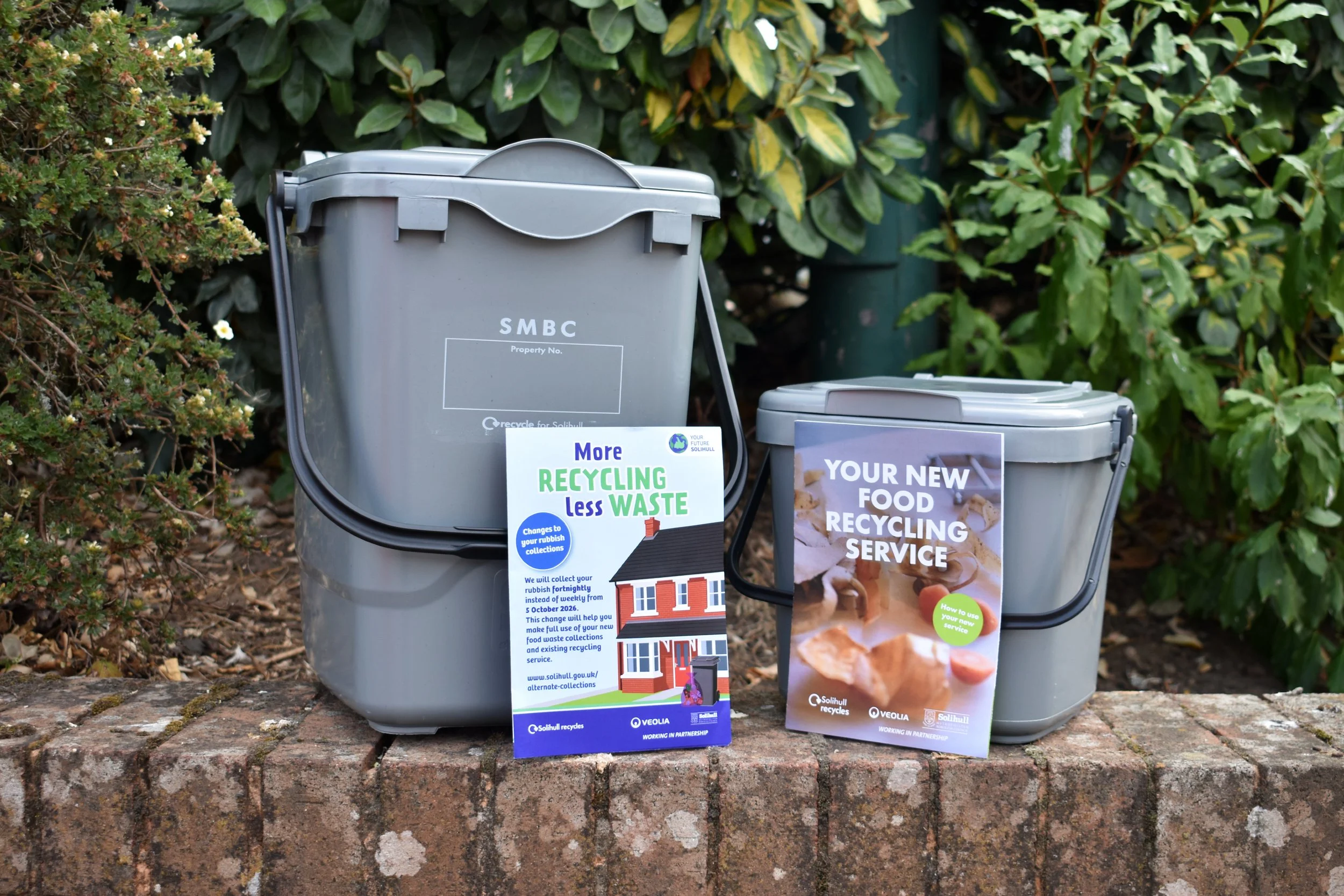
Food waste bins 101
What a sexy page you have stumbled upon. No matter how long you have had your food waste bins, I am here to give you a little helping hand to decode what’s what and how who.
Let’s first talk about what they are actually for. Long story short: creating energy.Long story long: the food that we put into our food waste bins gets placed in an anaerobic digestion tank where micro-organisms break the food down, releasing methane-rich biogas. That’s then collected and burned to generate electricity. Simple, right?
It’s worth pointing out that, like recycling, it’s not a perfect system. We should use our food and eat it.
Did you know
A full bin can generate enough electricity to:
power an led light bulb for 24hours
〰️
boil a kettle 3 times
〰️
charge a phone or tablet 5 times
〰️
power an led light bulb for 24hours 〰️ boil a kettle 3 times 〰️ charge a phone or tablet 5 times 〰️
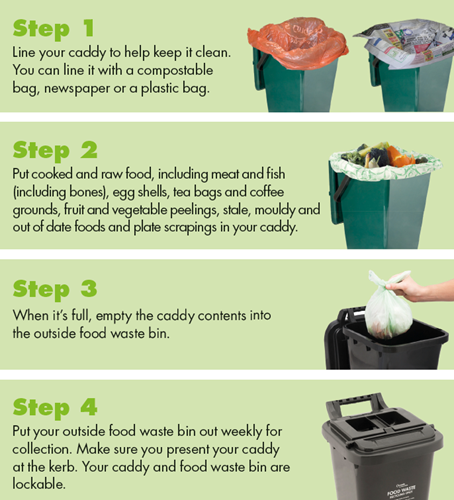
What can we put in them?
Do put in your bin:
All fruit & vegetables (cut, whole, trim, peelings, the lot)
Meat & fish (raw, cooked, bones, flesh)
Dairy (cheese, yoghurt, solid dairy, no milk)
Eggs & egg shells
Tea bags & coffee grounds
Cooked rice & pasta
Really any and all food, cooked or raw, just try and avoid liquids.
Do not put in your bin:
Packaging (foil, cling film, wrappers, plastic film)
Liquids (including cooking oils)
Non-food items (any general household rubbish, garden waste, animal waste etc.)
Glass & cans